City of
Cologne
Cologne, a megacity on the river Rhine:
famous for its cathedral,
beloved for its “Kölsche” street carnival and known for its Roman heritage.
Colonia Claudia Ara Agrippinensium
Photo: City of Cologne / RGM / N. Stabusch
Colonia Claudia Ara Agrippinensium
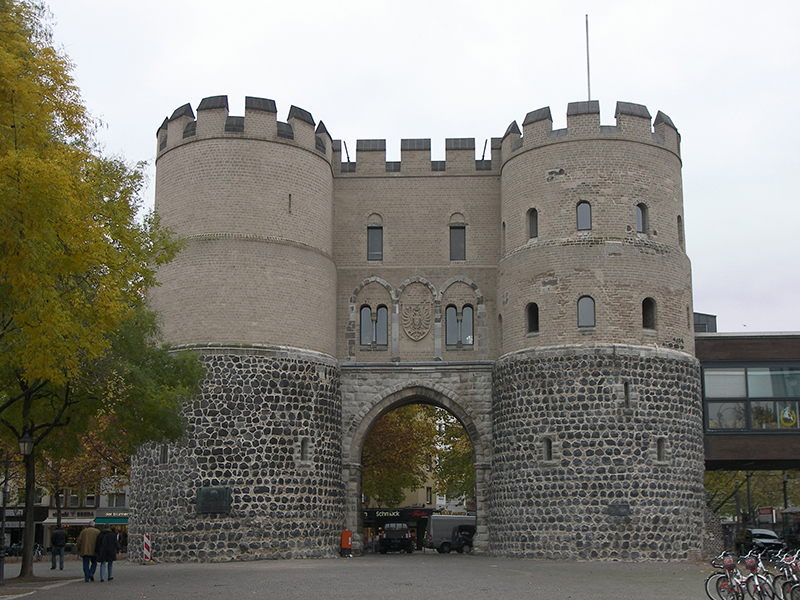
As Colonia Claudia Ara Agrippinensium, Cologne was one of the most splendid Roman cities north of the Alps for more than four centuries: the city wall with its mighty gate towers, the monumental public buildings, the Rhine harbour and the planned street grid shaped the cityscape – some of which have been preserved until today.
Cologne was a provincial capital, but not provincial. The metropolis played an important role on the Rhine border of the Roman Empire. The major long-distance roads from the south, west and north converged here, making Cologne a hub for people, news and trade goods from all over the world.
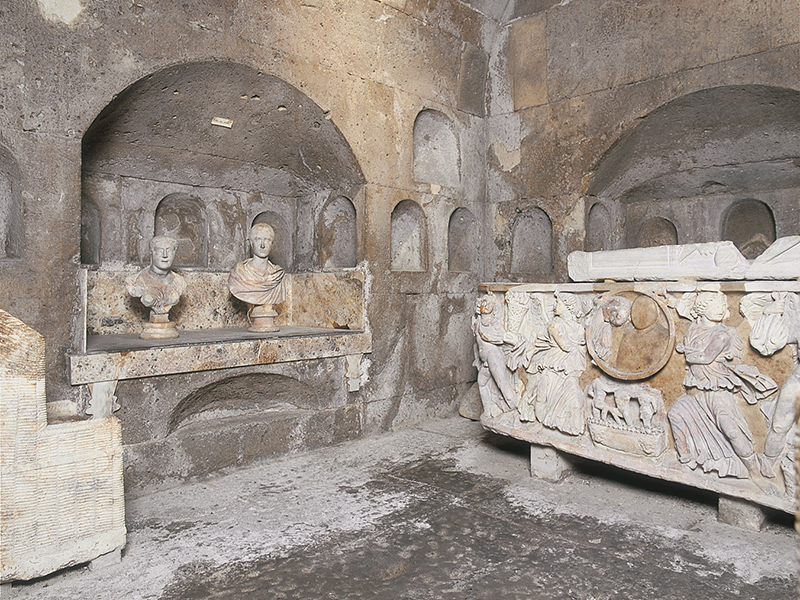
The Roman burial chamber in Weiden
Anyone arriving in Cologne today via the Via Belgica, the dead straight road “Aachener Straße” approaches the city on flat ground from the west and passes one of the most important stone monuments from Roman times. Immerse yourself in ancient times? In the Roman burial chamber in Weiden, this is possible in the truest sense of the word: dating from the second century, the burial chamber is considered the best-preserved structure of its kind north of the Alps. Deep underground, visitors can, among other things, marvel at stone furniture, marble portraits and a richly decorated marble sarcophagus. The central importance of Roman Cologne is also reflected in Via Agrippa, today's road “Luxemburger Straße”: in its time, it was an important link between the Mediterranean and the province of Lower Germania.
The Romano-Germanic Museum in the Belgian House
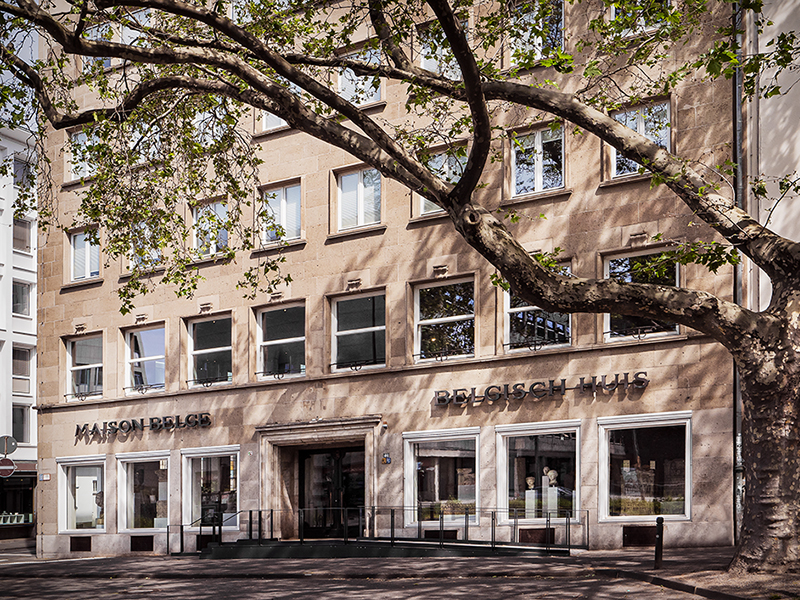
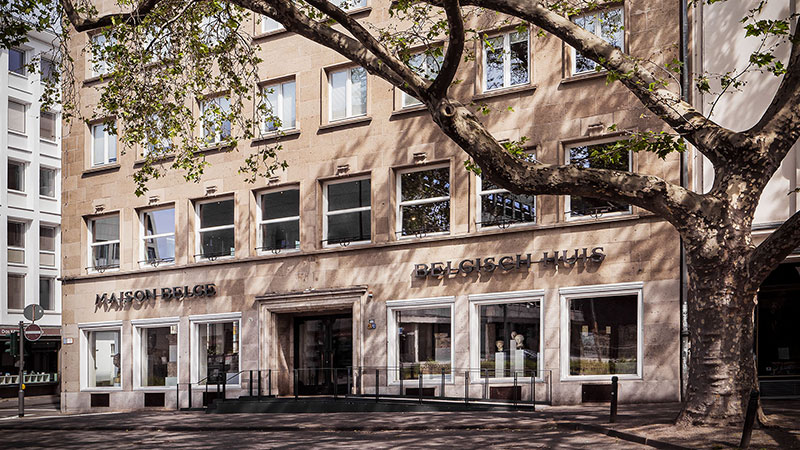
The Romano-Germanic Museum safeguards the archaeological heritage of the city and the surrounding area. Artefacts dating from prehistory to the early Middle Ages illustrate Cologne’s development and significance over the centuries. As well as offering an insight into life in the Roman city, the museum houses the world’s largest collection of Roman glassware. As the main building on Roncalliplatz is currently closed for renovation work, you can now view a selection of highlights from the museum’s extensive collection at the Belgisches Haus (Cäcilenstrasse 46 – near Neumarkt).
Roman harbour road and sewer
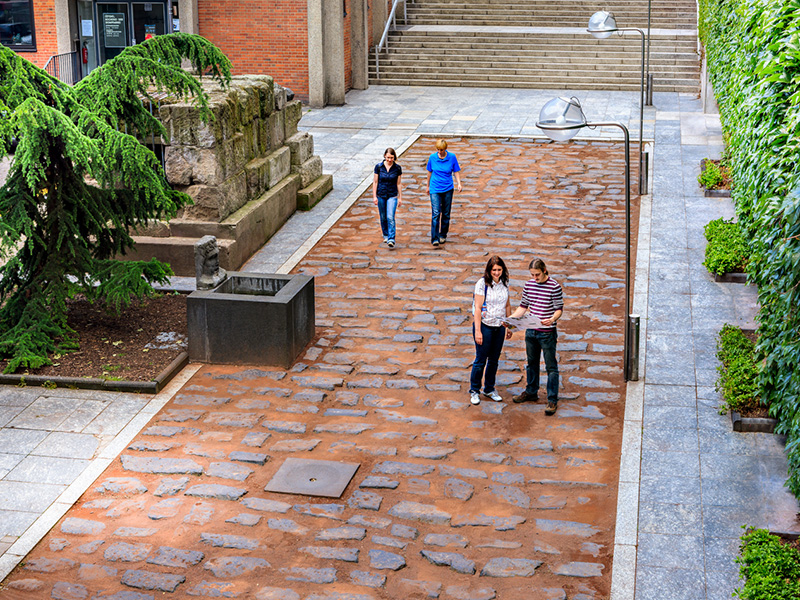
Between Roncalliplatz and Kurt-Schumacher-Platz runs Hafenstraße, a road paved with basalt, which led from the urban area of Colonia towards the northern harbour gate. The 33-metre-long and 6-metre-wide road was uncovered in 1969/70 and rebuilt, shifted 6 metres to the south. Next to Hafenstraße stands a 5-metre-long section of the sewer that reached the old Rhine channel at Kurt-Hackenberg-Platz. The fountain erected between the road and the sewer is not an original, but is modelled on Mediterranean examples.