-
Roman burial ground
-
-
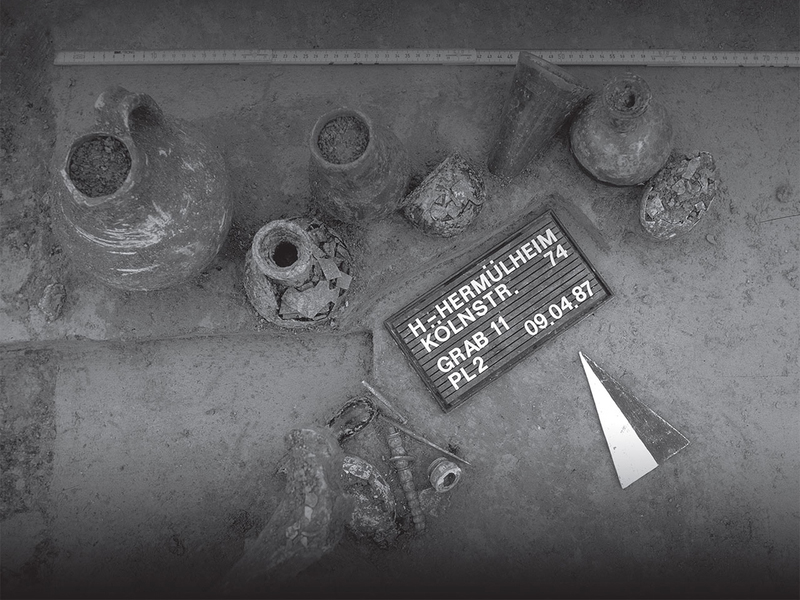
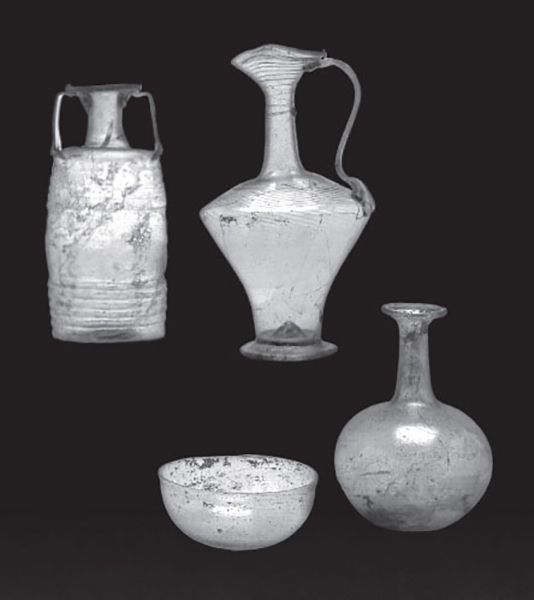
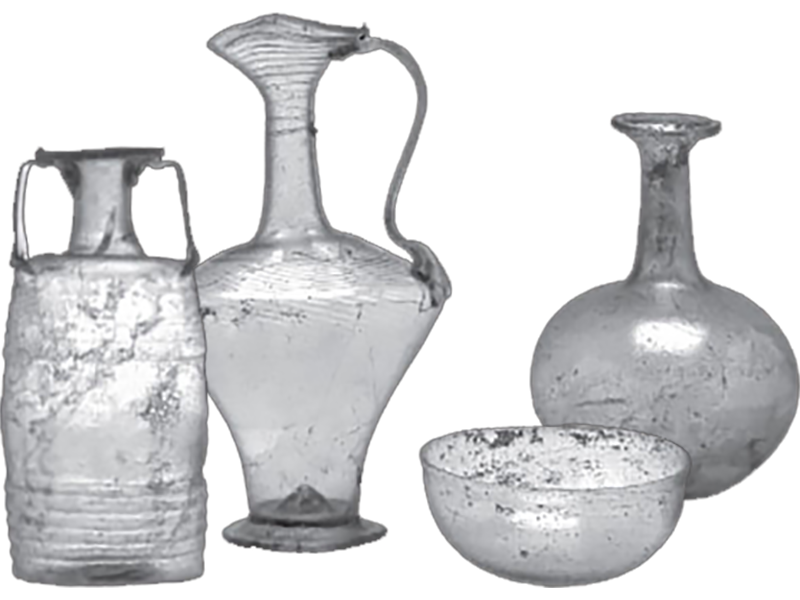
Spectacular insights into everyday life in Roman times: just 200 metres from Via Agrippa, around 45 graves with grave goods bear witness to the people who lived here between the 3rd and 5th centuries. At the end of the road "Am Alten Bahnhof" in Hürth-Hermülheim, archaeologists found numerous well-preserved stone coffins and other cremation and burial graves during two excavations. They suggest the existence of an associated settlement, a farmstead (villa rustica) near the Roman road.
The inhabitants of the farm were wealthy provincial Roman citizens of Colonia Claudia Ara Agrippinensium, i.e. the city of Cologne. This can be deduced from the valuable grave goods such as jewellery, clothing, glass and ceramic vessels and coins. They probably even belonged to the landowning urban upper class.
Some particularly valuable grave goods from the 3rd century reflect the political rise of Cologne as the capital before and during the so-called Gallic Empire (260 to 274) founded by Postumus. A porcelain snail from the Red Sea, a spinning device made of ivory and amber beads even indicate far-reaching trade relations.
In the 4th and 5th centuries, Germanic tribes inhabited the estate. The men were mercenaries in the Roman army. They and their wives quickly adopted the lifestyle and burial customs of their Roman-influenced environment.
About 300 metres west of the burial ground, at the junction with today's road “Severinusstraße”, the Roman Eifel aqueduct crossed Via Agrippa. “Severinusstraße” and today's road “Bonnstraße” probably originated from a control road along this aqueduct.