-
Efferen burial chamber
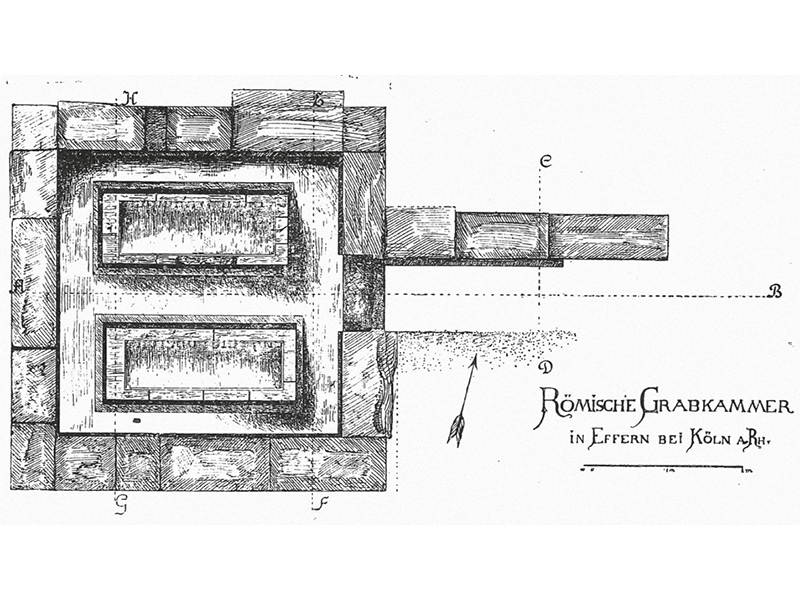
The Roman tomb in “Kaulardstraße” road here in Efferen is one of the most important surviving Roman burial sites north of the Alps. The chamber was originally located directly on Via Agrippa. Workers discovered it in 1899 during the construction of the station for the Cologne-Bonn district railway (promontory railway). The burial chamber probably dates from the late 3rd or 4th century.
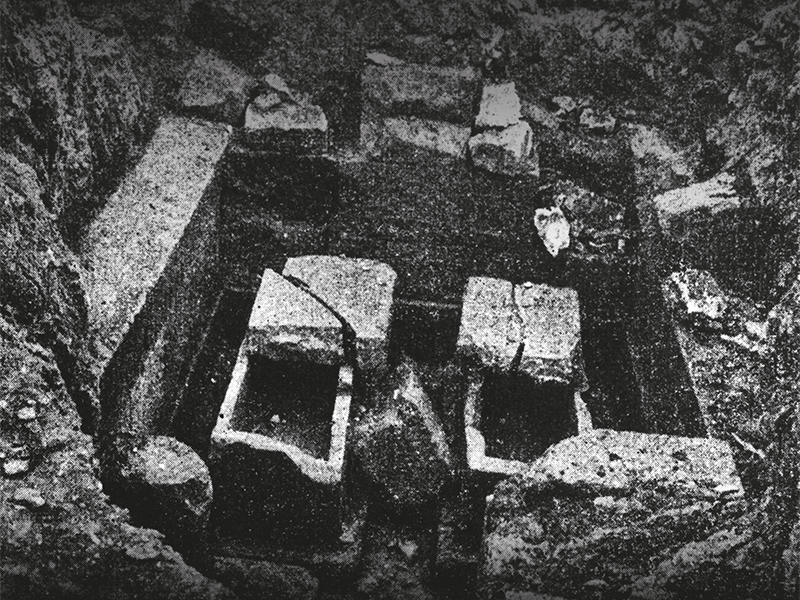
The almost square interior contains imposing sarcophagi made of light-coloured sandstone. However, they are damaged – the lids in particular are only partially intact. No grave goods were found, which suggests that the chamber was robbed. A skull and some long bones from the dead themselves have been preserved.
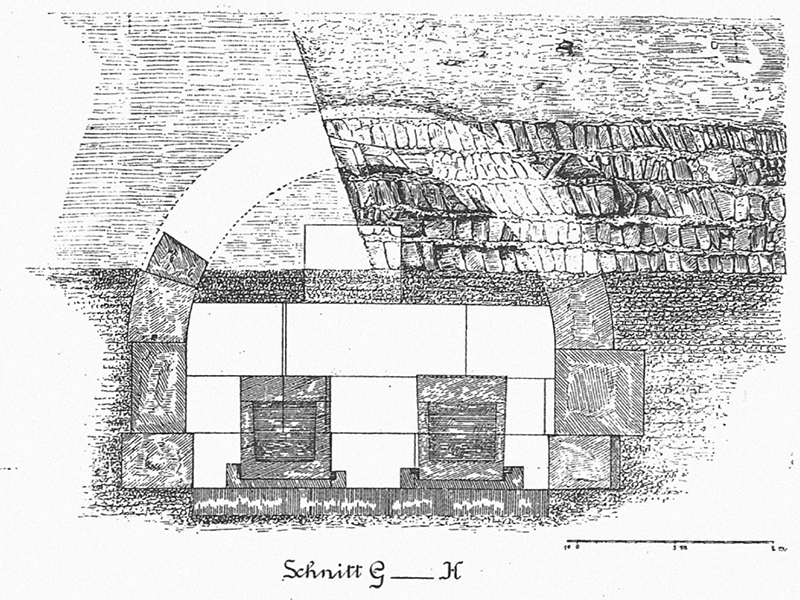
The floor of the chamber is paved with volcanic tuff blocks. In the lower area, the walls consist of red sandstone blocks of varying sizes. These are spolia, i.e. reused stones from an older building. The tuff vault, which must have been about 3.25 metres high, rests on the base. The ceiling area has not been preserved. What the building looked like above ground therefore remains unknown.
A passageway led into the burial chamber, the northern wall of which is well preserved. The chamber was closed by a door, which was probably made of wood. At the end of the northern access wall, the door jamb and a hole for the door bolt are clearly visible. The sarcophagi are wider than the entrance, so they must have been placed in the still open chamber during construction.
A key to visit the burial chamber can be borrowed from the Hürth municipal administration, city archives (tel. 02233 53-0, stadtarchiv@huerth.de). Group tours can also be arranged with the city archives.