-
Rimburg Castle
-
-
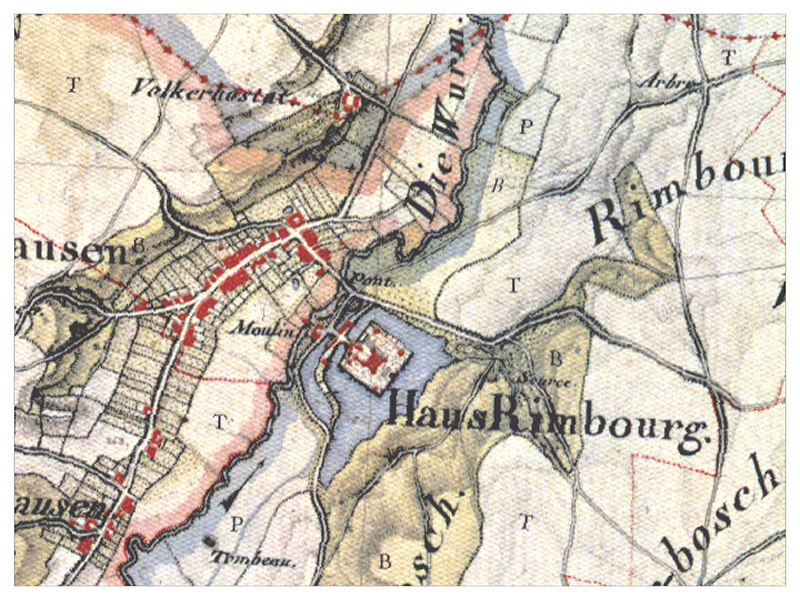
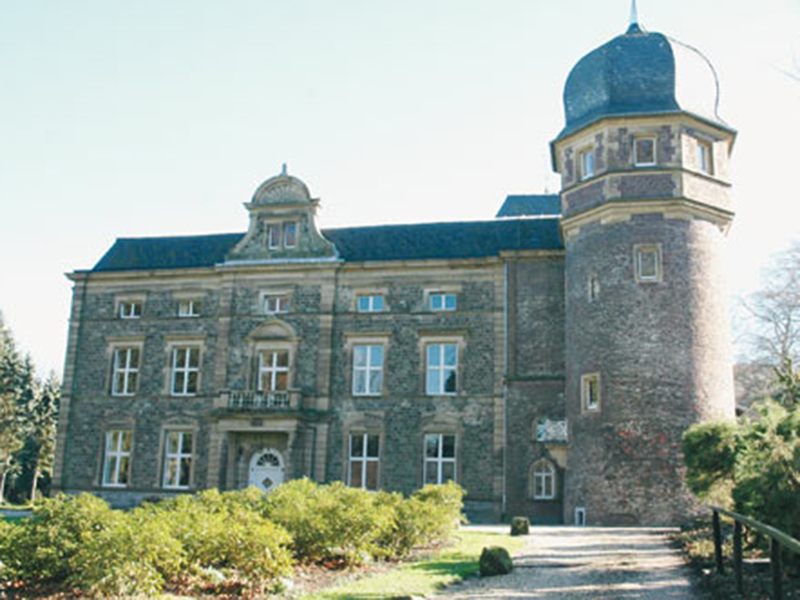
Located directly on the Wurm river and only a few metres from the Via Belgica, Rimburg Castle in Übach-Palenberg has always been in a strategically favourable position. It was built in the 12th century. Experts believe that a road post already stood there in Roman times. The first owner of Rimburg Castle in 1276 was the highwayman and robber baron Mulrepas. Shortly afterwards, Duke John I of Brabant had the complex completely destroyed; the lords of Mulrepas rebuilt it at the end of the 13th century.
A good 200 years later, in 1498, Emperor Maximilian I elevated Rimburg Castle to free imperial lordship, but Charles V declared it a Brabant lordship in the 16th century. For over 100 years, Rimburg Castle has been owned by the von Brauchitsch family, who clad the building with a Baroque façade in 1899, raised the south-western flanking tower and crowned it with a dome. In addition, the outer bailey was rebuilt.
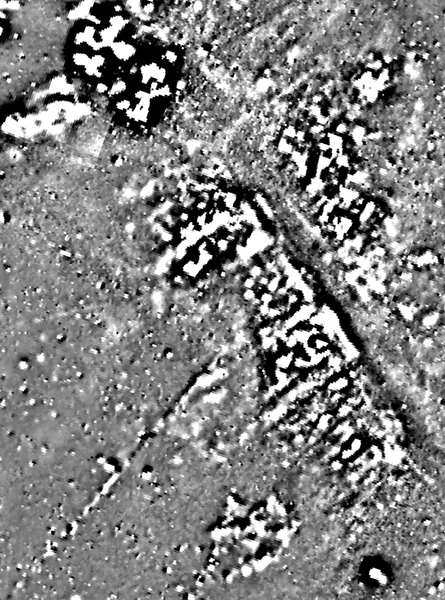
At this point, where the Via Belgica crossed the Wurm, a roadside settlement was established in the 1st century that continued to exist until the 4th century – the vicus of Rimburg.
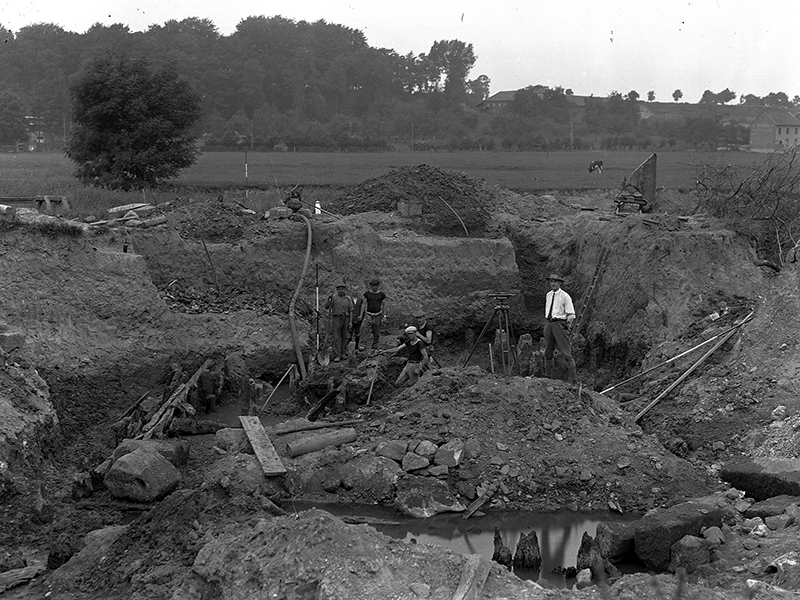
EThe first archaeological excavations took place here between 1926 and 1930. The foundations of strip houses along the road and several pottery kilns were uncovered. When archaeologists examined the Wurm crossing of the Via Belgica, they found a wooden bridge about six metres wide, for which two construction phases were documented. Shortly after the end of the Second World War, strip houses were discovered again during excavations on the Dutch side. The entire settlement covered at least four hectares on both sides of the Wurm. The strip houses were located directly on the road, while further half-timbered buildings stood away from it.