Town of
Jülich
With around 2,000 years of settlement history and unusually well-preserved historic buildings, Jülich takes its visitors on a journey through time. Fortified as early as the fourth century, the present-day town remained a centre of fortification architecture for centuries.
Iuliacum – strategically important
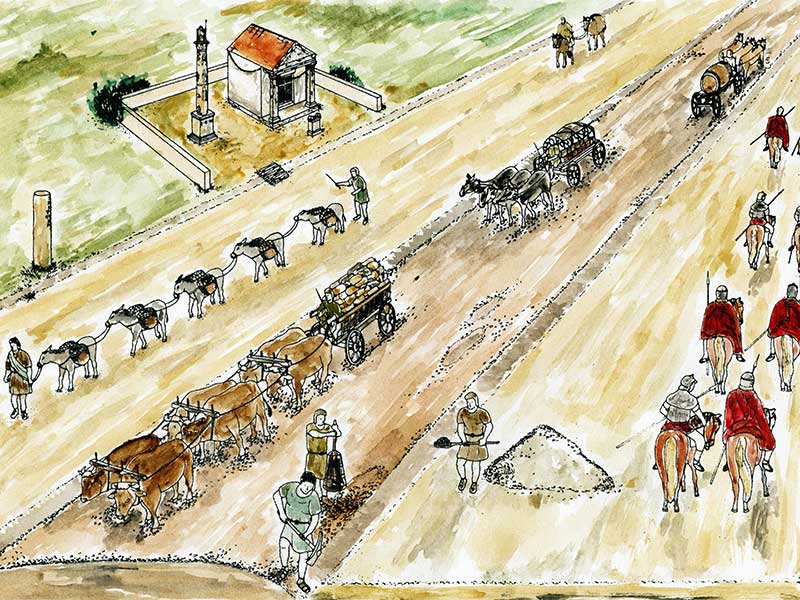
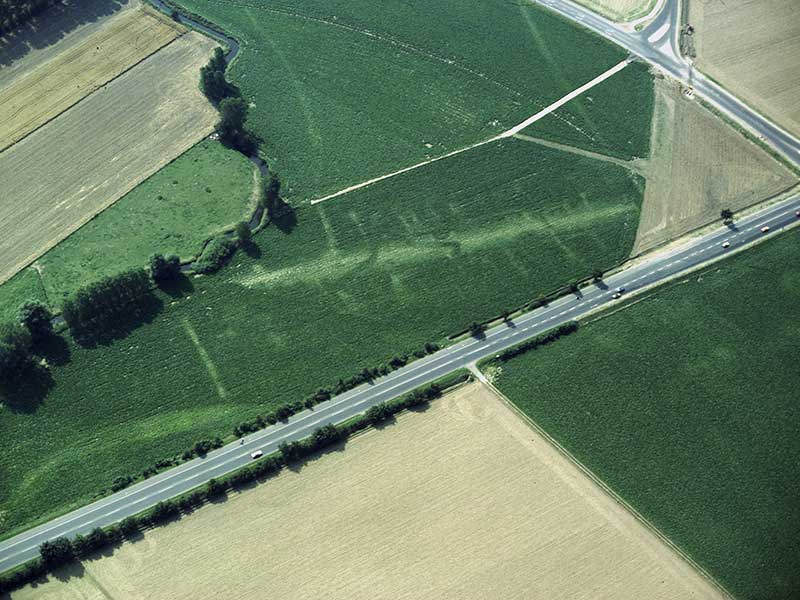
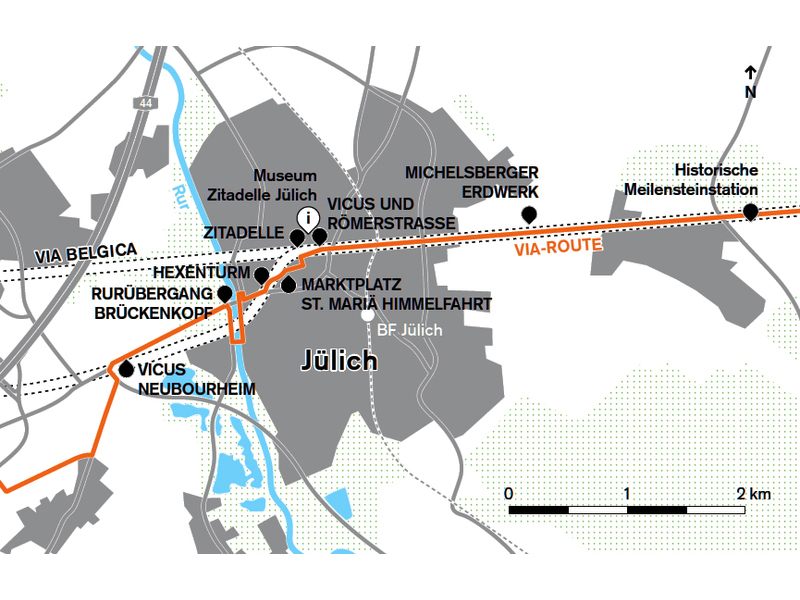
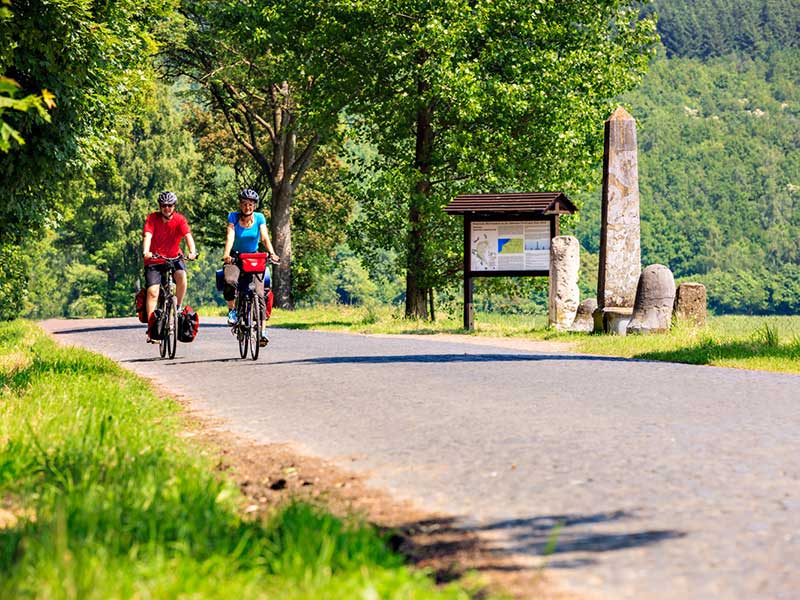
The long history of settlement and the importance of Iuliacum, the Roman name of the town, can be explained by its location: the Roman highway Via Belgica ran along a narrow section of the difficult-to-pass Rur Valley. The Romans recognised the strategic importance of the ford located here. Their settlement covered an area of around 13 hectares and enclosed what is now the market square.
Of witch towers, citadels and the “Brückenkopf Park” (bridgehead park)
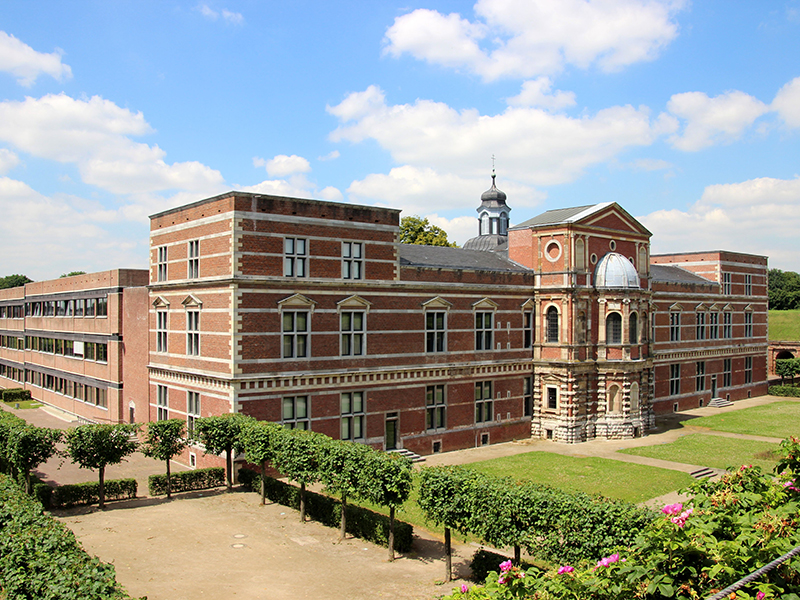
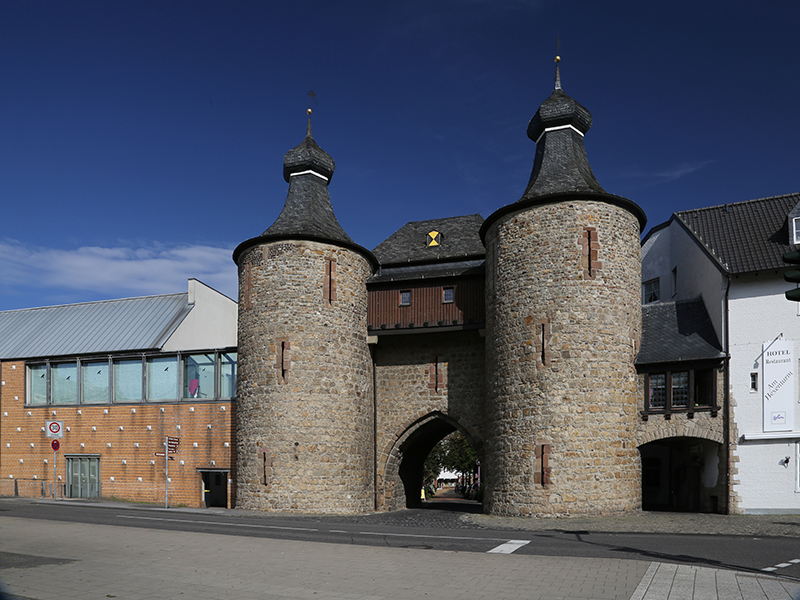
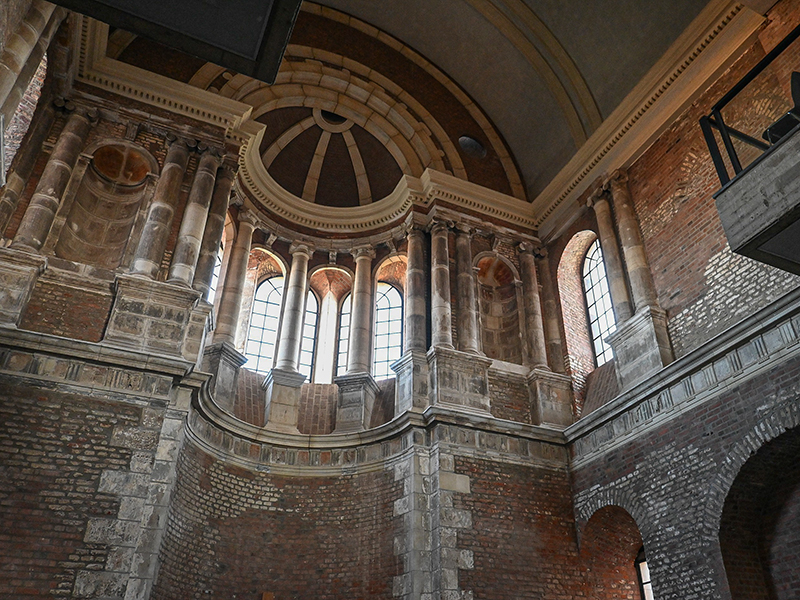
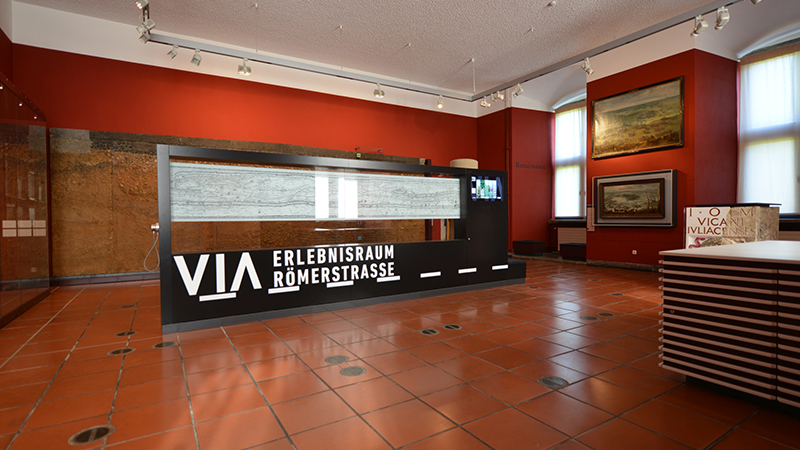
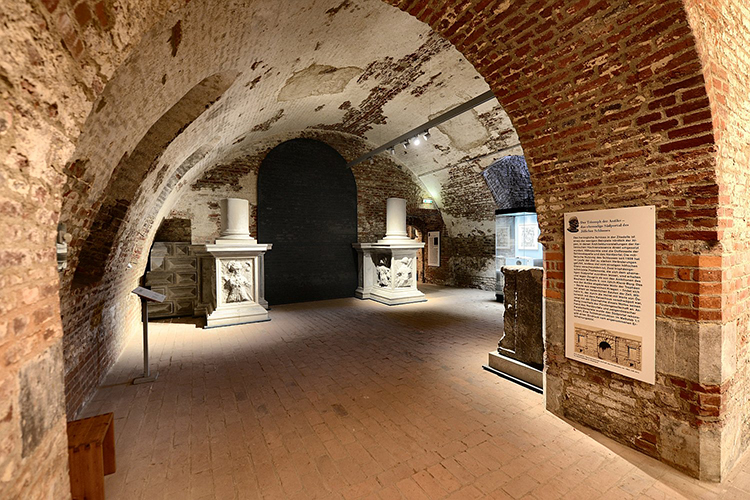
The first thing that catches the eye when you arrive in Jülich is the imposing Hexenturm (Witches' Tower), the only one of the town's four original gates still standing. It is one of Jülich's landmarks. Equally impressive is the Jülich Citadel. Once part of the Jülich fortress, the citadel, built in the Italian High Renaissance style, is the oldest of its kind north of the Alps. Inside, there is a museum and a documentation centre on the Via Belgica, where visitors can see an original cross-section of the Roman road, among other things.
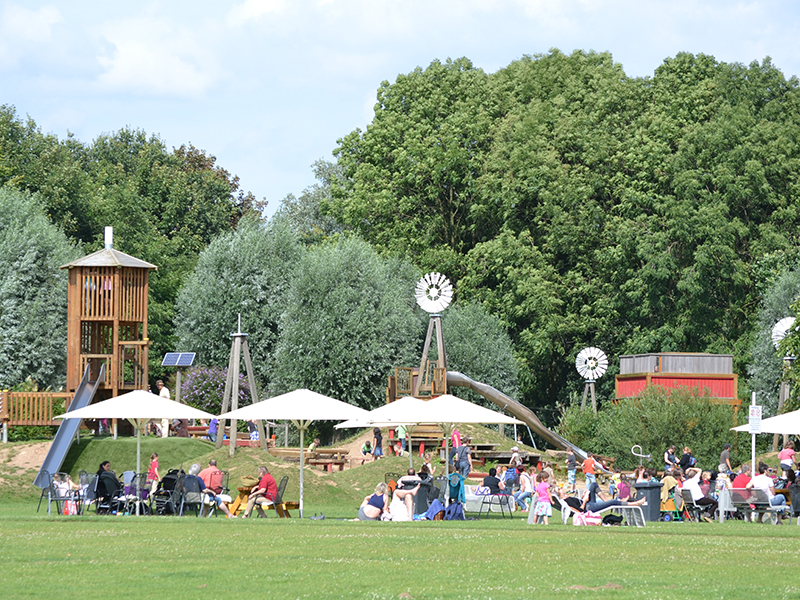
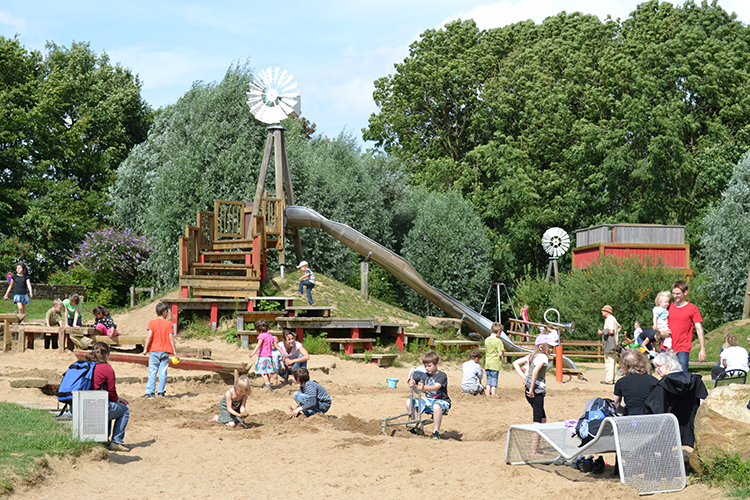
Visitors to Jülich can find information about the Napoleonic fortifications in Brückenkopf Park, where an information stele at the main entrance points to the Roman Road Adventure Region