-
Via Belgica in Übach-Palenberg
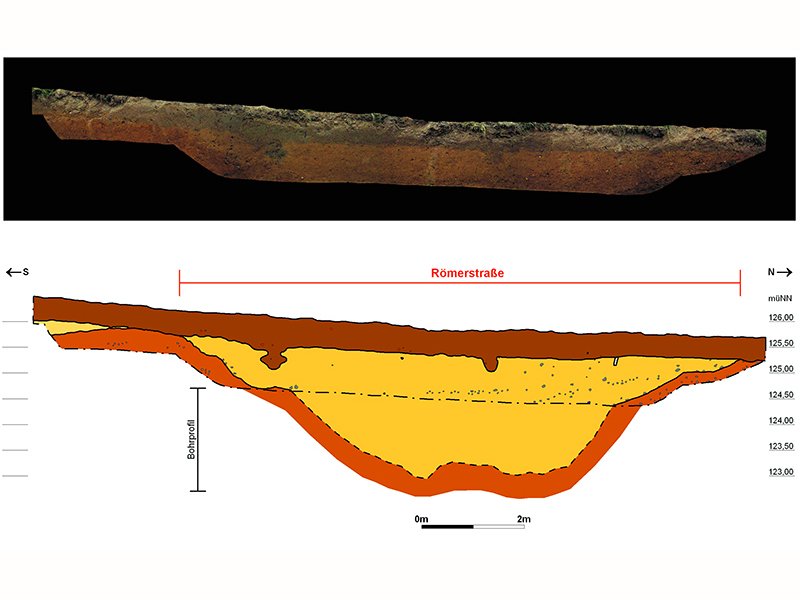
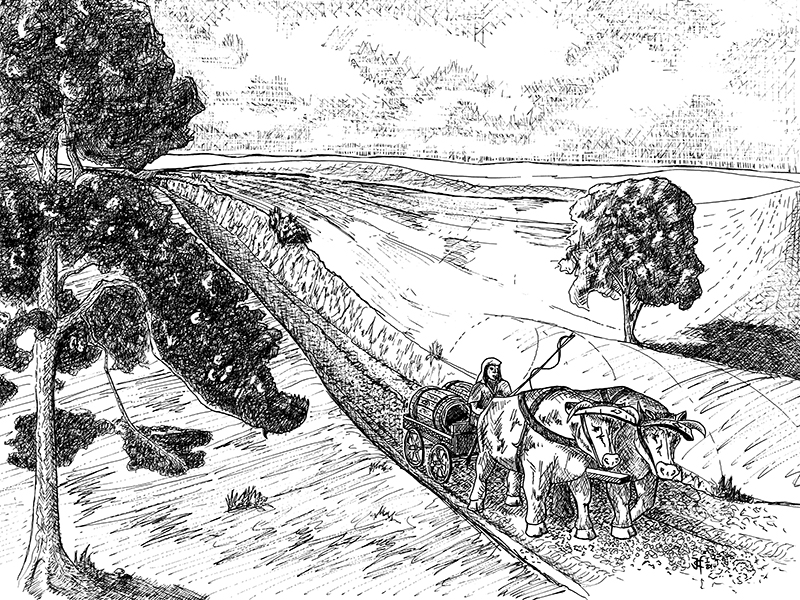
The Via Belgica had to overcome a difference in altitude of just over 20 metres between the plateau and the Übach valley. In order to keep the route straight, the Roman engineers opted for a suitable construction measure: they overcame the slope by laying the road as an inclined ramp in an artificial cutting. In order to keep the gradient of the route within limits, the cutting began gradually more than 130 metres before the slope and was approximately 230 metres long in total. The gradient of the road must have been between 8.5 and 10 per cent. This is confirmed by the archaeological investigations that were carried out here.
Geophysical measurements along the Via Belgica show that the long-distance road can still be found beneath the modern dirt road. The clearly visible road ditches on both sides of the path indicate that the long-distance road was 25 metres wide at this point. Where the dirt road bends today, the Roman road continued in a straight line and gradually dug itself into the terrain. A profile section through the road approximately 50 metres before the edge of the terrain showed that the road cut here was already just over two metres deep. The width of the road was reduced to just under three metres in the cut.
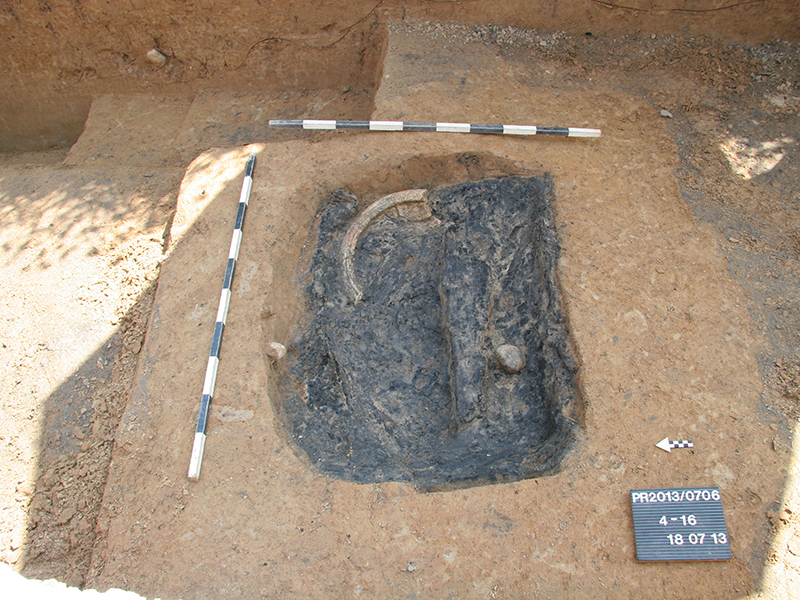
About 3,500 metres before the terrain cut, excavations on the southern side of the Via Belgica revealed a Roman burial site from the second half of the 1st or early 2nd century AD. In Roman times, it was common and popular to bury the dead in the immediate vicinity of a long-distance road and to mark the grave with a gravestone or even a representative tomb. This is evidenced by examples from throughout the Roman Empire.