-
Steinfeld Monastery
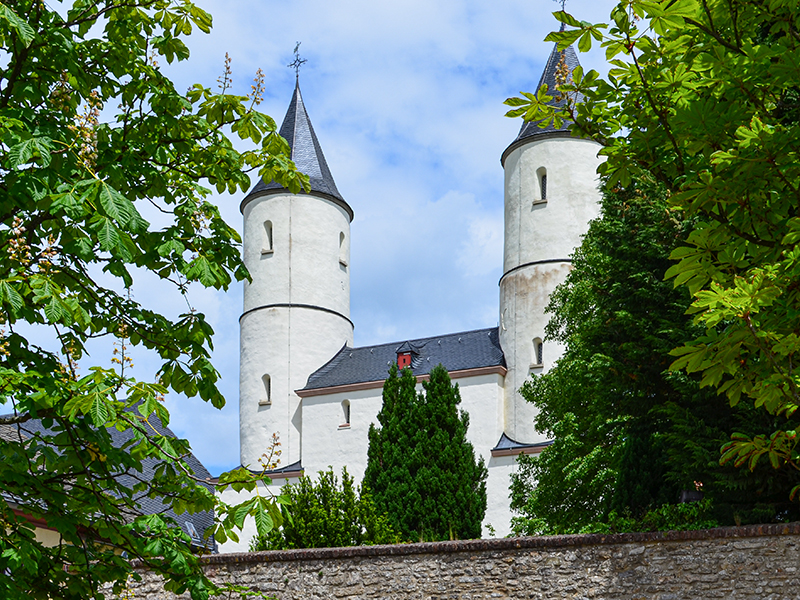
Steinfeld Monastery in the Eifel region is located on a hill in the south of the municipality of Kall. It is a former Premonstratensian abbey with an important basilica dating from the early 12th century. Together with the surrounding houses, the "Eifel Abbey" forms the district of Steinfeld.
In 1130, the Premonstratensians took over the monastery, which had been built 60 years earlier. It developed into an important ecclesiastical centre in the German Empire with branches throughout Europe. The monastery was granted abbey status in 1184. The line of 44 abbots only ended in 1802, due to progressive secularisation. After that, the complex served secular purposes and the basilica continued to be used as a parish church. The Salvatorians took over the monastery in 1923.
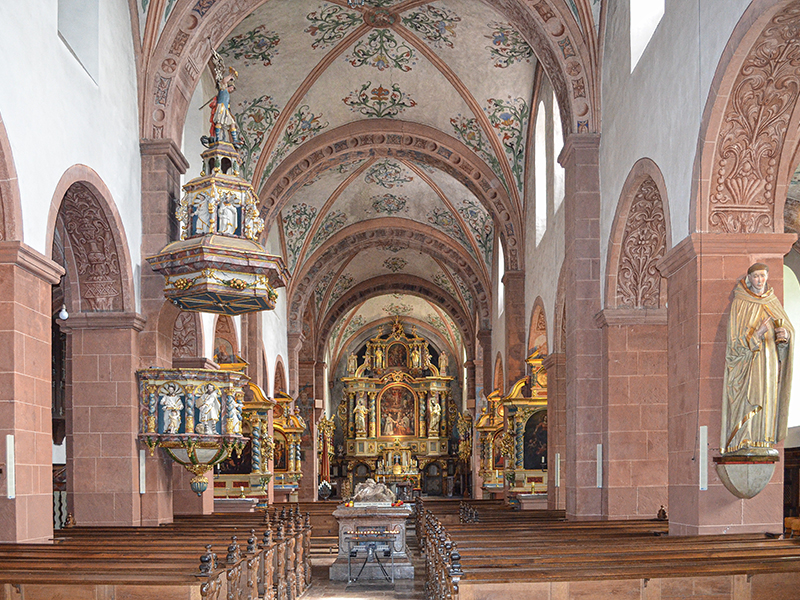
The monastery's basilica was built between 1142 and 1150 by the Premonstratensians as one of the earliest German vaulted churches. The original Romanesque style, Gothic, Renaissance, Baroque and modern steel applications characterise the architecture today. In 1960, the church was granted the status of a papal minor basilica. The Steinfeld monastery is considered one of the best-preserved monastic monuments in the Rhineland.
The tomb of Hermann Josef in the centre of the church makes the basilica a place of pilgrimage. It is covered by a slab made in 1732 with a reclining figure made of alabaster. The actual tomb, made of Urft marble, dates from 1701. According to legend, Hermann Josef offered the baby Jesus an apple in the Church of St. Mary in the Capitol in Cologne, which he accepted.
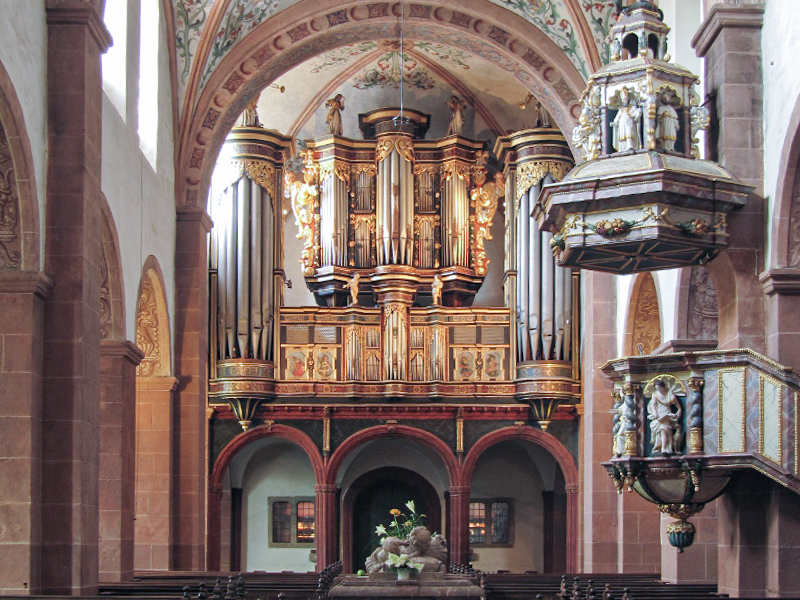
The basilica's first large organ was built around 1600. It has been expanded several times and now has 1,956 pipes. Most of the pipework is original. The organ is one of the most important of the Rhenish Baroque period.