-
Marian pilgrimage in Aldenhoven
Parish Church of St. Martin
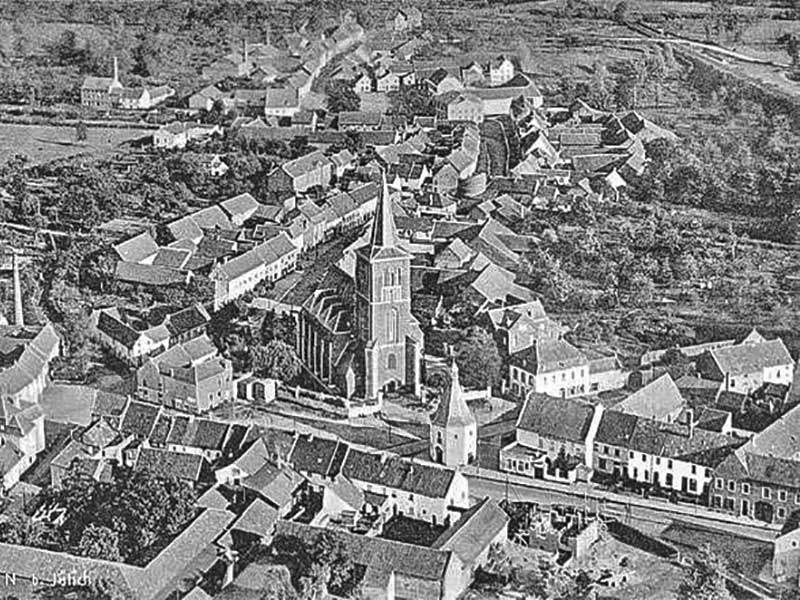
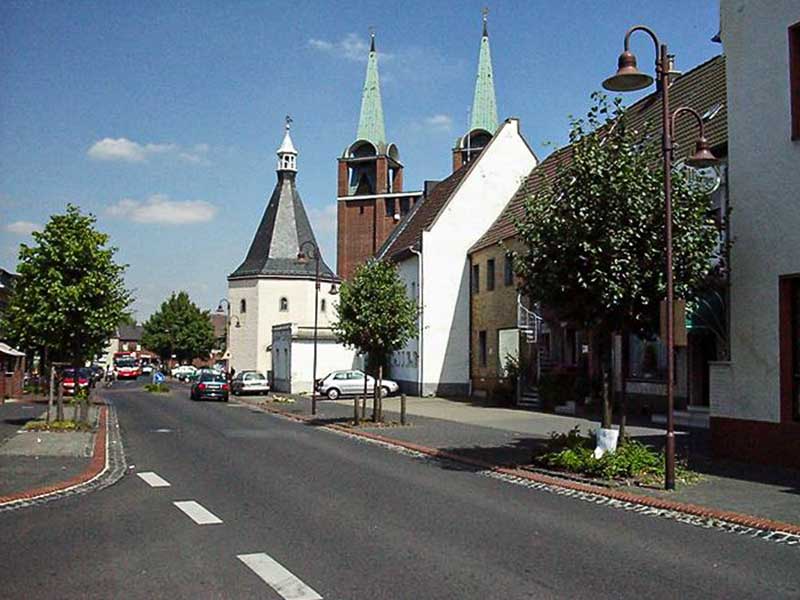
The Catholic parish church of St. Martin in Aldenhoven was built between 1949 and 1953 on the site of the late Gothic St. Martin's Church as a parish and pilgrimage church. Originally, there was a small field church here, which served as a place of worship for several villages. In 1516, it was replaced by a Gothic-style hall church. The 64-metre-high tower was visible from far away in the Jülich region – one of the reasons for the destruction of the church during the Second World War. The valuable “Bitterleiden” altar from 1510 also fell victim to the bombs. Only a few remains could be restored.
Chapel of Grace and Discovery
It was in 1654 when Dietrich Mülfahrt, a citizen of Aldenhoven, discovered an image of the Virgin Mary in a lime tree here. Since then, Aldenhoven has been a place of pilgrimage and is visited by thousands of pilgrims every year. The two chapels, the “Auffindungskapelle” (Chapel of Discovery) and the “Gnadenkapelle” (Chapel of Grace), bear witness to this. The former was initially built as a wooden shrine on the site where the lime tree once stood. Within sight of the “Auffindungskapelle”, the “Gnadenkapelle” has stood since 1659, commissioned by Duke Philipp Wilhelm von Jülich. The image of the Virgin Mary is still kept in the “Gnadenkapelle” today.
Vaahsen House / Mining Museum
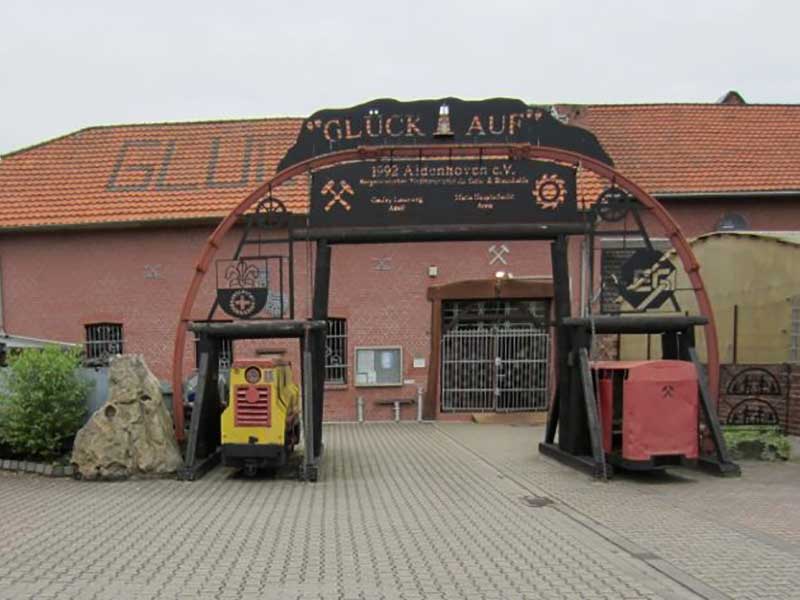
The history of Vaahsen House is closely linked to that of the image of Mary: after Aldenhoven had developed into a busy place of pilgrimage, the care of the pilgrims was entrusted to the Capuchin friars of Jülich. In 1661, they built a monastery right next to the “Gnadenkapelle”. This became what is now Vaahsen House and the Mining Museum. At the beginning of the 18th century, the friars renovated the church and the main building. In 1797, they were forced to leave their monastery, which was dissolved in 1802 and subsequently used as a farmstead. The former church was converted into a barn and was rebuilt accordingly. The monastery residential building, a simple brick structure with a barrel-vaulted cellar, became a farmyard. In the 1950s, agricultural use came to an end and the municipality of Aldenhoven handed over the complex to the traditional miners' association. Since 1997, the association has been running a mining museum in Vaahsen House.