-
Rosenthal serpentine
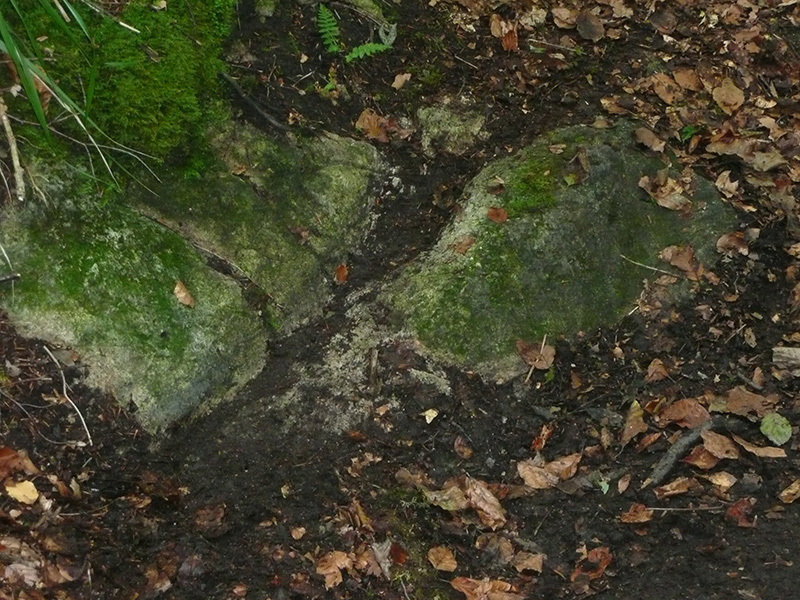
Winding and striking – this is how the branch of the Via Agrippa can be described, which led down here on the southern slope of the Rosenthal as a sunken path into the Urft valley. Despite the steep gradient, the road was used by carts in Roman times. This is evidenced by the tracks carved into the rocky ground. Meltwater and rainwater were drained away via a paved cross channel.
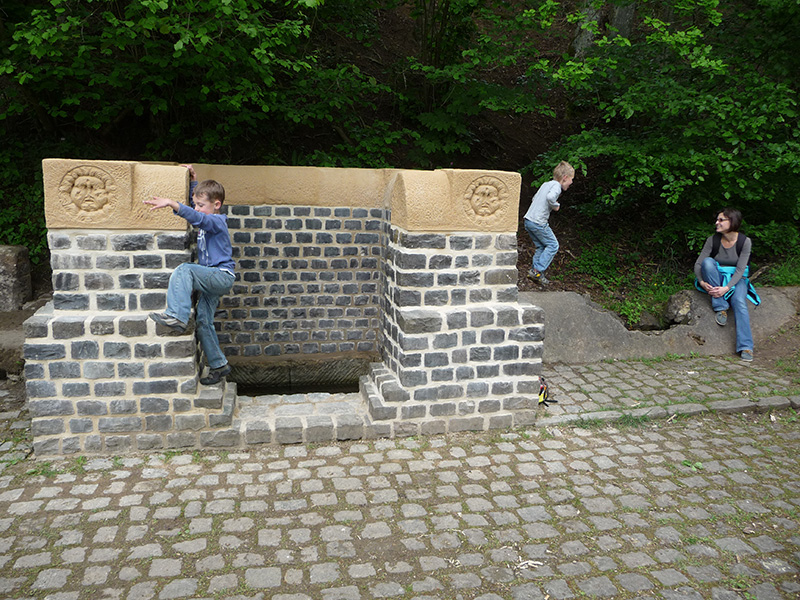
At the foot of the slope, not far from the road and easily accessible from the hiking trail, is the "Grüne Pütz" (green pond). This is where the Roman Eifel aqueduct began, supplying ancient Cologne with fresh spring water.
A seepage pipe as a spring catchment, a basin decorated with Medusa heads and the first section of the Roman canal can be seen there. While Via Agrippa ran mostly straight towards Cologne, the aqueduct led from the "Grüner Pütz" in a large arc to the former Roman provincial capital, as it had to be built with a constant gradient and bypass mountains.
Between the present-day towns of Kall and Schmidtheim, the Via Agrippa split into two routes. This branch of the Via Agrippa, with its winding section on the hillside, formed the straighter and shorter connection from north to south. The other route led from the north over the Urft, through the Eichter Valley and across what is now Marmagen, before rejoining the other route.