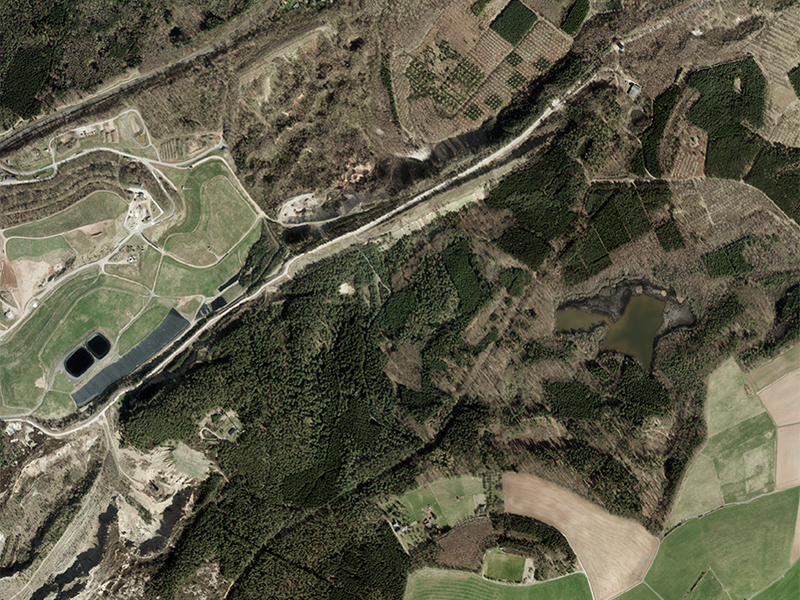
In this area, the metal lies in an eleven-kilometre-long and one to two-kilometre-wide strip in the earth. The lead ore could be mined just below the surface. In the Middle Ages, shafts a few metres deep were therefore built to reach the ore-bearing layers. However, due to the low ore content of only about two per cent, mining was only really lucrative on a large scale. Therefore, enormous quantities of material were brought to the surface in open-cast mining and crushed there; the ore was sorted out. The unusable rock was used to fill older shafts or tipped into a heaps, creating extensive spoil tips.
Although there are still around 100 million tonnes of lead ore in the ground, these are not worth mining under current world market conditions. Today, the main features visible are the sparsely vegetated spoil heaps from the former lead mining operations, which are of particular interest from a nature conservation perspective. A special plant community known as heavy metal vegetation has developed here. One of its characteristic features is the calamine thistle. Rare animal species can also be found here. Other areas are covered with trees and shrubs. Part of the area was converted into a landfill site in the 1980s. However, this is now closed. The mining damage area is under nature conservation and is designated as a European FFH area.
The Mechernich Mining Museum with the Günnersdorf visitor mine shows the various mining techniques and tools used above and below ground. Parts of the former above-ground workplaces can still be seen on the signposted "Mining History Trail"