-
Blankenheim Castle
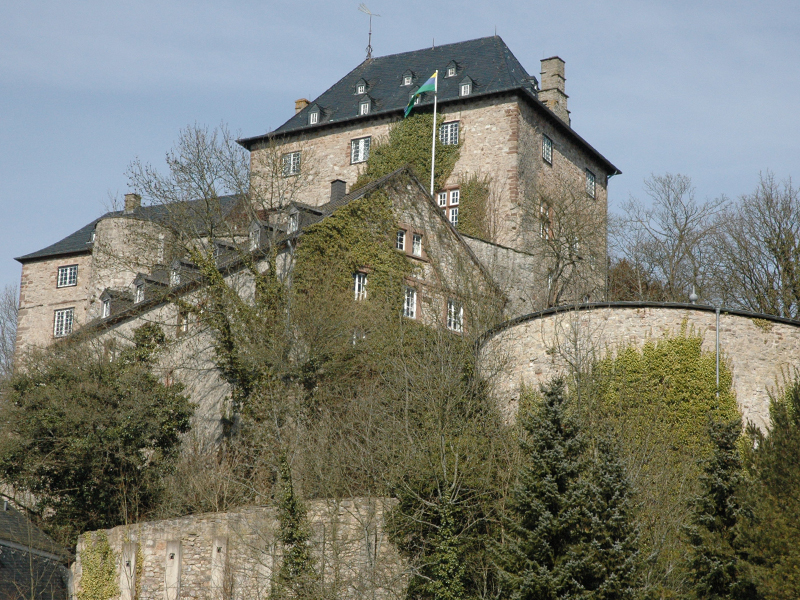
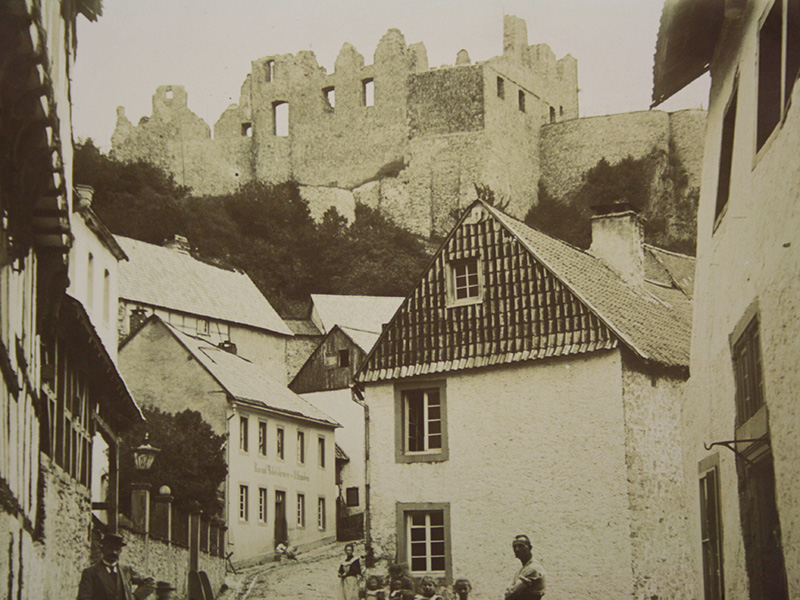
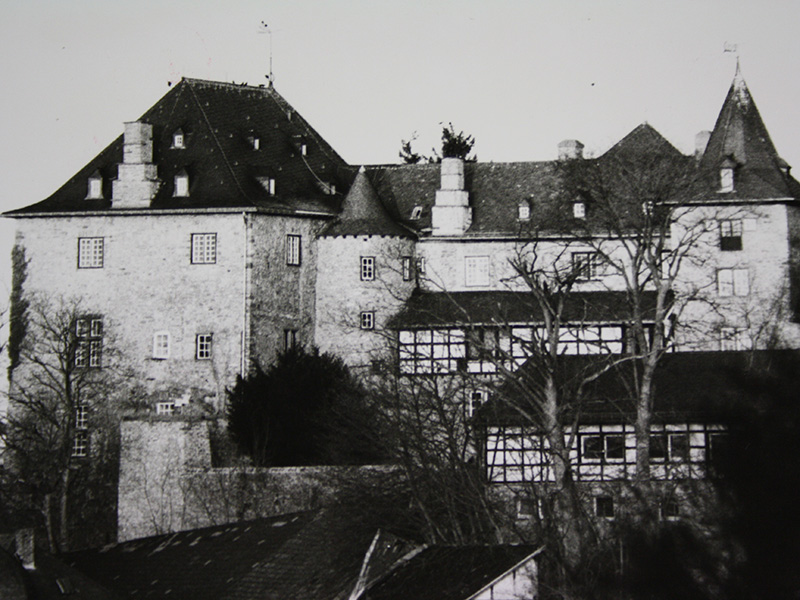
The imposing castle dominates the townscape of Blankenheim. Finds indicate that a Roman fort once stood here. Excavations have uncovered bricks stamped with the mark of the Sixth Legion, among other things. Gerhard III probably built the castle above the source of the Ahr river at the beginning of the 13th century. As parts of it have been altered or replaced by new buildings over the centuries, it is no longer possible to determine what it originally looked like.
Count Gerhard VIII had the castle demolished in the 15th century and rebuilt as a palace. When it passed from the Blankenheim dynasty to the Counts of Manderscheid by inheritance in 1468, Blankenheim entered a golden age that lasted until the middle of the 18th century.
The castle presented itself as a truly fortified structure that was also befitting the ideal of a seat of power.
The Manderscheid family wanted to impress their guests with prestigious facilities: around 1730, they built a Baroque garden with an orangery in front of the moat. But that's not all: in the late Middle Ages, Count Dietrich III of Manderscheid-Blankenheim had a long-distance water pipe laid to the castle to improve its supply. The 1.5-kilometre-long pipeline crossed the "In der Rhenn" valley and climbed a 15-metre-high mountain spur – the Tiergarten. The route was designed as a gravity and pressure pipeline and as an aqueduct tunnel.
In Blankenheim, elements of the late medieval castle's water supply system are still preserved or recognisable: the "In der Rhenn" well chamber, parts of the pressure pipe through the valley, the inlet ditch in front of the tunnel, the Tiergarten tunnel and the water house on the south side of the Tiergarten. An original pipe from the water pipeline can be seen in an exhibition on the Tiergarten tunnel system at the Eifel Museum in Blankenheim. The tunnel is the only known one of its kind from the late Middle Ages.